Bend, Reach, and Get Up Off the Floor Without Bracing for It
Move Better. Feel Better. Live Better.
The slow, careful first steps out of bed. The hand on the counter before you bend down. The quick mental math before you sit on the floor with the grandkids. Stiffness rarely shows up all at once. It builds up quietly until you're planning around it. You don't need another random stretch. You need a simple daily plan that wakes up the joints built to move.

Stiff in the Morning? Careful Every Time You Bend?
You're not broken. You're just stuck. About one in two U.S. adults lives with a musculoskeletal condition,[1] and most of us now spend more of the day sitting than we did a decade ago.[2] Joints that don't get moved through their range tend to lose it. So you move more carefully, and the stiffness increases a little more every year.
Morning Stiffness That Takes an Hour to Wear Off
The first steps out of bed are slow and careful. Your back and hips feel like they need time to "warm up" before the day can start. The average U.S. adult now sits about 6.4 hours a day,[2] and the joints feel it.
A Stiff Mid-Back and Tight Hips Doing the Wrong Jobs
Your mid-back and hips are built to move. When they stiffen up, your lower back, knees, and neck start doing work they weren't designed for. That's often where the nagging aches come from, not "wear and tear."
Quietly Losing Trust in Your Body
You skip the floor. You hesitate before twisting to grab something from the back seat. You say no to the hike. None of it feels like a big decision, but together they shrink the life you're living.
I didn't realize how careful I'd become until I watched myself get up off the floor.
Stiffness Is Common. Staying Stuck Doesn't Have to Be.
The good news: mobility responds to consistent practice at any age. A few focused minutes a day add up.
Your Body Is a Stack of Joints, and Each One Has a Job
Some joints are built to move. Others are built to stay steady. When a joint that's supposed to move gets stiff, the steady joint next to it starts moving to make up for it. That's usually where the aches begin.
That's why this challenge spends so much time on your mid-back and hips. Get them moving again, and the joints around them can go back to their own jobs.
Mid-Back (Thoracic Spine) Built to move
Built to rotate and extend. When it stiffens, your neck and lower back pick up the slack. This is the Week 1 focus and comes back in Week 4.
Lower Back (Lumbar Spine) Built to stay steady
Happiest when it's stable and supported by a strong core and glutes. That's why core and glute activation run through the whole program.
Hips Built to move
Hours of sitting tighten the front of the hip and switch off the glutes. Hip flexor, hip extension, squat, and lunge work restore that range.
Shoulder Blades Built to stay steady
A strong, active mid-back gives your shoulders a stable base, which helps your posture and protects your shoulders.
Here's What Changes First

Go at your own pace • Designed by a Physical Therapist

Created by a Physical Therapist With 26 Years in the Field
"Better movement changes everything. And it's never too late to start."
Hi, I'm David. For the past 26 years I've helped thousands of people get past stiffness, pain, and fear of movement, from professional athletes chasing performance to a 94-year-old who wanted to stay independent. I'm a Physical Therapist and Certified Strength and Conditioning Specialist, and after years of running my own clinics in Nevada and Arizona, I started Movement Answers to help people stay ahead of these problems instead of only recovering from them.
Here's what I've learned: most everyday stiffness comes from joints that have stopped moving the way they're designed to, not from damage. You don't need extreme workouts or to already be "flexible." You need a simple, progressive plan you can trust.
Simple. Guided. At home. No guesswork.
David Hawkins, PT, CSCS
Founder, Movement Answers
The Changes People Notice First
"I was nervous to start anything new because I didn't want to stir anything up. The first week was so gentle that I actually kept going. By week two, getting out of bed stopped feeling like a project."
— Sandra, 58
"I'd tried stretching apps and random YouTube routines. Nothing stuck. Having the calendar tell me exactly what to do each day was the difference. I just pressed play."
— Jason, 47
"Former athlete, now a desk guy. I didn't realize how stiff my mid-back had gotten until the thoracic work in week one. My golf turn feels like mine again."
— Rick, 54
"Sitting on the floor with my grandkids used to mean planning how I'd get back up. Now I just get up. That's the part I'd tell my friends about."
— Maria, 63
These are composite examples based on patterns David has seen across thousands of patients over 26 years in practice. They are not verbatim quotes from named individuals to respect client privacy.
The 28 Day Move Better Challenge: Your 4-Week Path to Confident, Easy Movement
Your daily calendar shows exactly which videos to press play on. Each week builds on the last: wake up your mid-back and hips, go deeper, put it into real movement, then lock it in.
Foam roll
Start each day by rolling 2–4 target areas, such as the mid-back, lats, quads, or hips, to get ready to move.
Mobility sequences
1–2 guided sequences a day, chosen for that week's focus. Controlled movement, not passive stretching.
Weekly review day
Days 7, 14, 21, and 28 put the week's sequences together in one 20–30 minute session, so they really sink in.
Foundations: Wake Up Your Mid-Back & Hips
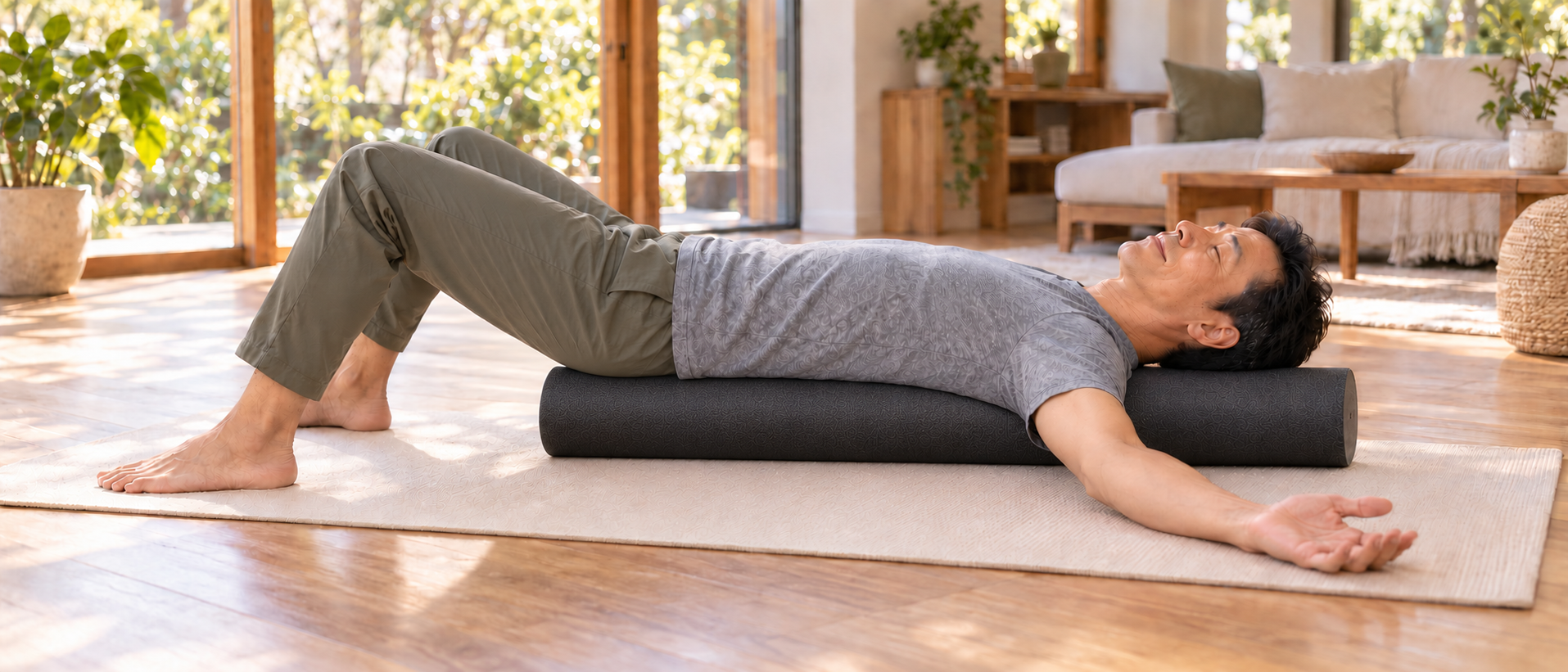
Learn to foam roll, open up your thoracic spine, and wake up your hips and glutes. Easy on purpose: slight effort, never strain.
- Ease morning stiffness
- Improve posture as your mid-back opens up
- Switch on the glutes that support your core
Deepening Techniques: Build Mobility That Lasts

Familiar sequences get the next progression, plus core activation and hip-extension work for anyone who spends a lot of the day sitting.
- Greater range of motion
- A steadier core that protects your lower back
- Less daily tension in your hips and back
Momentum & Progress: Move With Confidence

Your new range goes into real-life movement: lunges, squats, and flowing hip patterns that call on your core and glutes. Foam rolling starts to feel easier, with fewer tight spots.
- Smoother, stronger movement
- Better coordination and balance
- Confidence in everyday bending and lifting
Reinforcement & Celebration: Lock It In

Back to the mid-back and hips, now with more control: spinal rotation, the Scorpion sequence, lateral lunges, and a deeper squat. Then you celebrate and plan what comes next.
- Keep the range you've built
- Feel strong, steady, and energized
- Leave with a plan to keep it going
10–15 minutes on weekdays • Physical-therapist guided
Everything You Get Inside the 28 Day Move Better Challenge
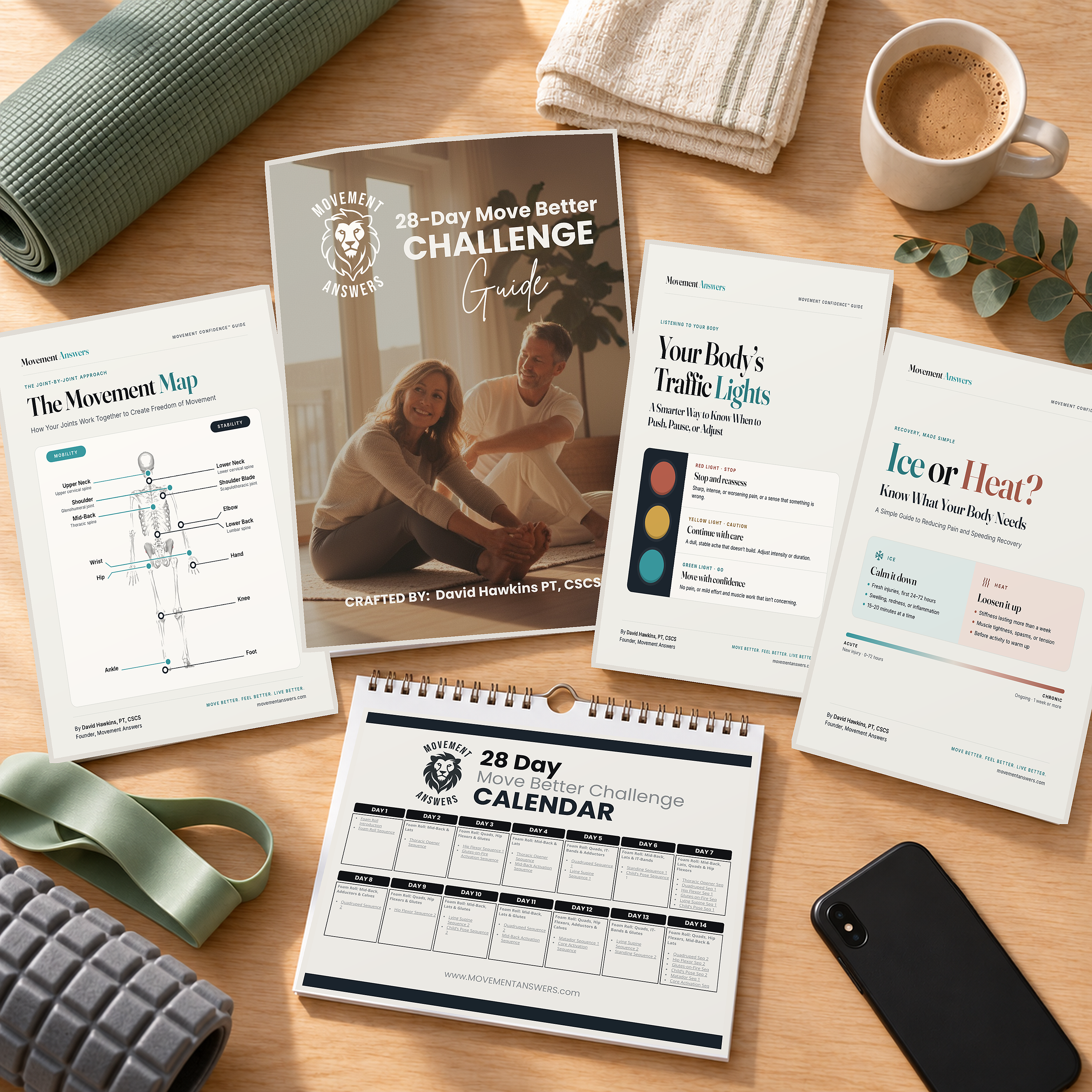
30 Guided Follow-Along Video Sequences
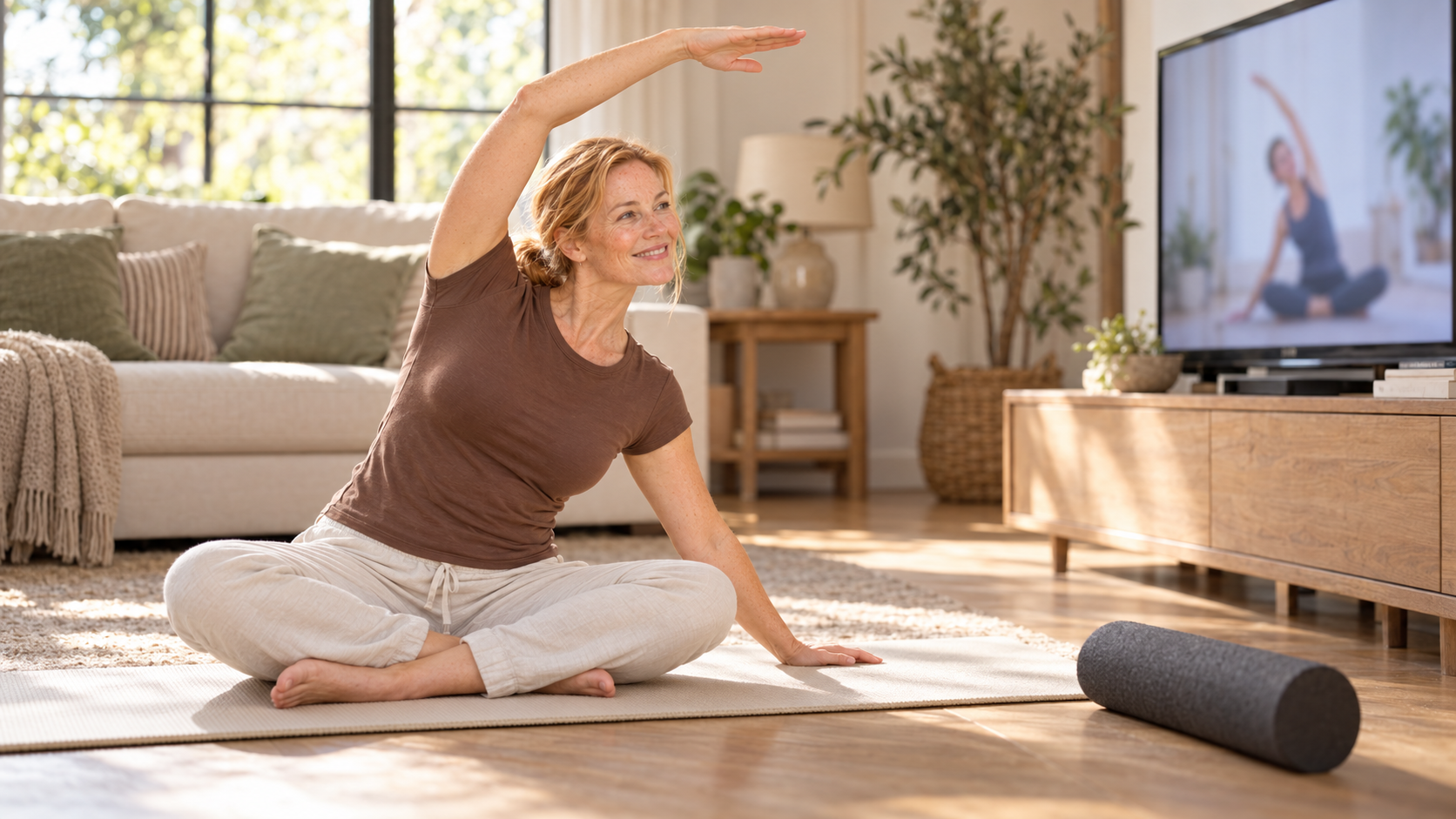
Foam rolling and mobility sequences laid out day by day, from gentle foundations to full-body flows.
The 28-Day Challenge Guide + Daily Calendar
The why behind mobility, your weekly game plan, pro tips, and a clickable calendar that links every day's videos.
Daily Encouragement & Reminder Emails
Short, steady nudges that help you stay consistent for all 28 days.
Private Challenge Community
A low-pressure group to ask questions, share progress, and stay accountable.
Mobile Platform Access
Stream on your phone, tablet, computer, or smart TV.
Your Body's Traffic Lights
A simple way to know when to push, pause, or adjust, so you can move with confidence.
The Movement Map
How your joints work together to create freedom of movement.
Ice or Heat? Know What Your Body Needs
A simple, evidence-informed guide to easing soreness and recovering well.
Lifetime Access
Repeat the challenge anytime. Most people notice something new each time through.
You save $656. One-time payment, yours for life.
Start Your 28 Days — Get Instant Access
One-time payment. Instant access. Yours for life.
Join the 28 Day Move Better ChallengeBacked by a 30-day money-back guarantee
What Makes This Different
Most mobility programs are either too basic to change anything or too complex to stick with. This one starts gentle and progresses every week.
It was designed by a licensed Physical Therapist with 26 years of clinical experience, not built around photo-worthy poses.
It trains mobility, not just flexibility. You'll learn to control new range, not just reach it.
No guessing what to do today. The calendar links every day's videos, so you just press play.
Day 28 is a starting point. You'll leave with habits, a plan, and a clear next step.
Is This the Right Next Step for You?
Right for you if you…
- Feel stiff, achy, or older than you are, especially in the morning
- Spend long hours sitting at a desk, in the car, or on the couch
- Have tried stretching, yoga, or online routines that didn't stick
- Want to stay ahead of problems, not just react to them
- Can set aside 10–15 minutes on weekdays, plus one 20–30 minute review session each week
Not for you if you…
- Have a recent injury, surgery, or unexplained pain. Please see your physician first
- Want a high-intensity workout or conditioning program
- Expect results without showing up consistently
- Are looking for a quick fix instead of a habit that lasts
Instant access • One-time purchase • Keep it for life
Try It Risk-Free
100% Money-Back Guarantee

The 28 Day Move Better Challenge comes with a 30-Day Satisfaction Guarantee. If you're not completely satisfied with the program, contact us within 30 days for a full refund. No questions asked.
Frequently Asked Questions
Do I need any equipment?
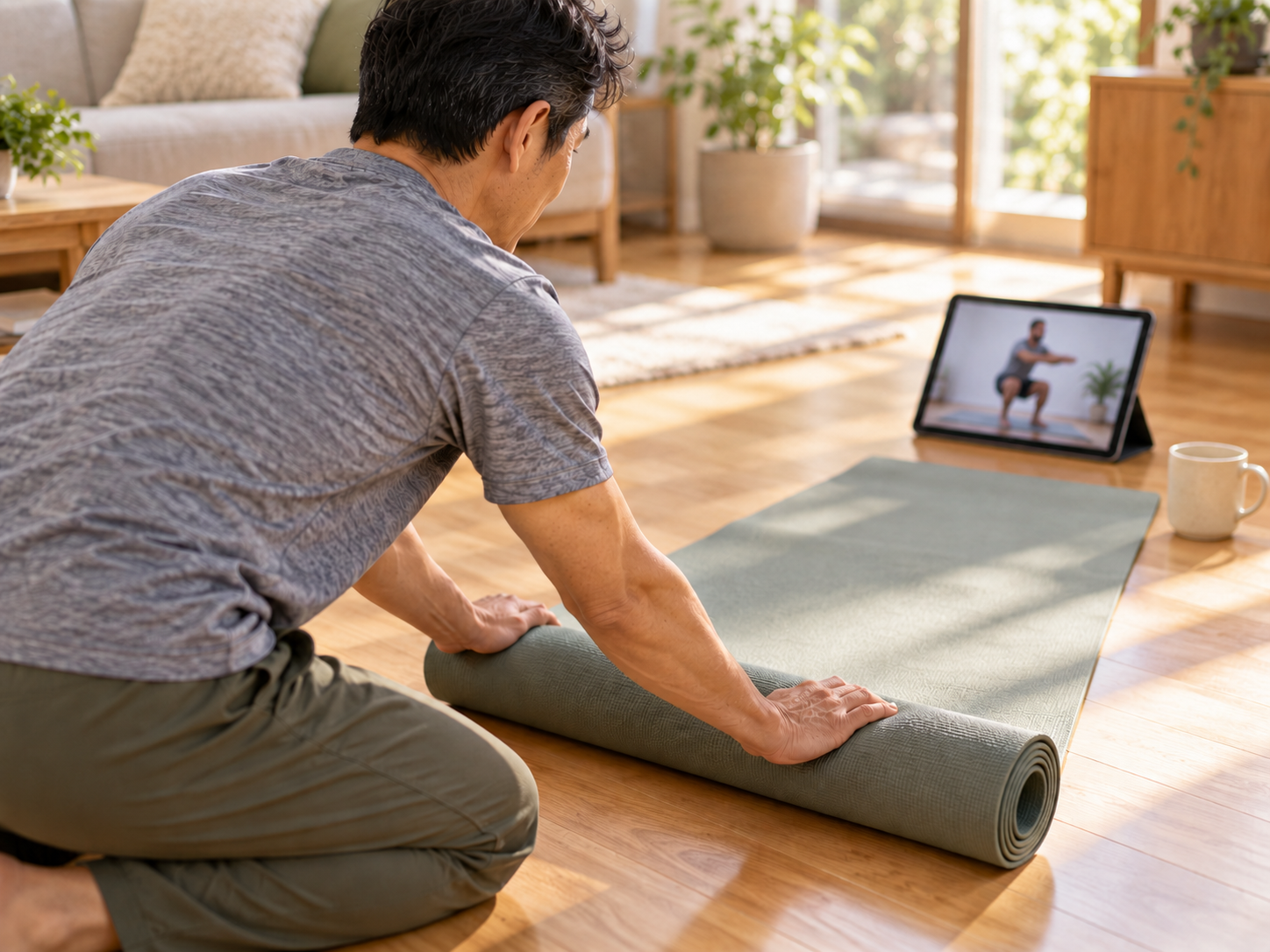
Just two basics: a yoga or fitness mat and a foam roller, since every session starts with a few minutes of foam rolling. You'll also need a little floor space and a phone, tablet, computer, or smart TV to stream the videos. A resistance band or massage ball can help, but they're optional.
I'm not flexible, or I have an old injury. Is this safe for me?
The challenge was designed by a licensed Physical Therapist to be beginner-friendly. It starts gently, and you're encouraged to adapt or skip anything that doesn't feel right. Aim for slight effort, never pain. If you have a specific injury, recent surgery, or a diagnosed condition, please check with your healthcare provider before you begin.
How long does each session take?
Weekday sessions take 10–15 minutes: foam rolling plus one or two guided sequences. Review days (Days 7, 14, 21, and 28) run 20–30 minutes because they put the week's sequences together. Sessions can also run longer if you choose to combine videos. Move review days to whatever day works best for you.
When will I notice a difference?
Many people notice easier mornings and less stiffness within the first week or two. Everyone moves at their own pace, though, and the full 28 days is what turns new range into control you can count on.
What if I miss a day?
Life happens. Just pick up where you left off. Consistency over time matters far more than a perfect streak.
What happens after day 28?
You keep lifetime access, so you can repeat the challenge anytime. When you're ready for more, you'll be invited to the Movement Confidence Membership™, with ongoing mobility programming, coaching, and community. Day 28 is the starting point, not the finish line.
Ready to Move Without Thinking Twice?
Move Better. Feel Better. Live Better. Your 28 days start today.




Designed by a Physical Therapist • 30-day guarantee